
The New Consumer Equation: How Value, Convenience and Locality Are Reshaping Consumption.
Consumer behaviour is now going through a new stage. Because of ongoing inflation, economic uncertainty and changes in lifestyle, consumers have become more careful about the places and ways in which they spend money, but this hasn't resulted in a straightforward reduction in consumption. On the contrary, they are redirecting their spending, exercising greater selectivity when it comes to value, while at the same time still spending on those categories, experiences and services which they regard as worthwhile.
The result is a more discerning consumer who seeks value without automatically choosing the lowest-priced option, expects convenience, increasingly discovers products through digital channels, and places greater emphasis on local relevance and personal wellbeing.
Value Is Being Redefined, Not Reduced
Rising prices are still the number one concern among consumers, since 79% surveyed consumers reported trading down to manage costs and more than half are seeking out deals on every purchase they make. However, the greater change is not merely a move to lower prices. One-third of consumers are cutting back in one category while at the same time spending more in another, and over one-third of those who are concerned about prices still intend to spend money on discretionary purchases.
What this means is that a new value hierarchy is being established: consumers are reducing their spending in cases where there is little distinction between products and increasing their spending in instances where they feel there is genuine quality, experience or personal relevance. Brands therefore may find it less effective to compete merely on price than to clearly explain why their product should be included in the consumer's spending priorities.
Convenience Has Become the New Baseline
The journey of the consumer is also becoming more focused on convenience. In the United States and China, more than 90% of consumers use online-only retailers, while in Germany and the UK that figure is over 80%, and about 40% of consumers in major markets order their groceries by having them delivered.
The pattern is also seen in the way people consume food. The proportion of global food service spending accounted for by food delivery has risen from 9% in 2019 to 21% in 2024, and consumers now make use of an average of 3.6 food-shopping channels. Although digital adoption may have sped up during COVID-19, the advantage of convenience has continued even after the disruption had passed. Consumers are becoming more unwilling to put up with unnecessary inconvenience when faster and easier alternatives are on offer.
Digital Discovery Is Growing—But Trust Still Matters
Digital platforms are now acting as powerful tools for discovering products, since in 2023, 32% of consumers used social media to carry out product research, whereas this figure in India is nearly 50%.
Yet having reach does not mean that trust is automatically gained. Although social media can affect discovery, family and friends are still more trusted when it comes to making purchase decisions. It is obvious therefore that brands must secure digital attention while at the same time building up their credibility through authentic experiences, recommendations and proof.
Local Relevance Is Becoming a Stronger Purchase Driver
People are also once again favouring local businesses and brands. Forty-seven per cent say that it is important to buy from companies that are locally owned, and 36 per cent prefer to buy local brands to support domestic businesses. Significantly, only 13 per cent give affordability as the reason for selecting domestic brands, indicating that the preference for the local is now more closely linked to identity, relevance and support for the economy rather than just price.
In India this is especially clear since 53% of consumers prefer food that is locally produced even if it is more expensive, as compared with 44% of consumers around the world.
From Economic Pressure to Selective Consumption
All this is taking place in the context of slower economic growth and ongoing uncertainty. Yet consumers are not giving up on consumption instead, they are becoming more mindful about it. There is also increasing importance being placed on health and well-being, with 52% expecting it to be healthier in the next five years.
The consumer equation now seems very clear that they should spend less in situations where value is low, pay more when relevance is high, demand convenience in all cases, and tend to select brands which match their own personal and local priorities.
What Does this Means for Brands?
The next stage in the contest between consumers will be determined not so much by providing lower prices as by understanding where consumers are willing to cut back, where they still indulge themselves, and what makes a brand worth selecting.
Those brands which are able to integrate value, convenience, digital accessibility, local relevance and wellbeing into a consistent overall proposal will be in a better position to maintain their resilience as consumers' priorities keep on changing.
Consult with HBGTM Insights
Since consumers' priorities are becoming more fragmented and their spending more selective, companies now need more acute intelligence to work out what consumers value, where demand is changing and how purchasing behaviour is developing.
HBGTM Insights enables businesses to turn these market changes into actionable strategies by means of consumer research, market intelligence, competitive analysis, market sizing and custom research solutions.
Go to www.hbginsights.com to find out how our research-based solutions can help you identify emerging consumer opportunities, improve your market strategies and assist in achieving sustainable growth.
Discover MoreAbout The Author
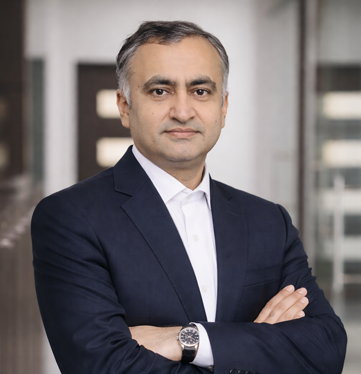
Ankur Malhotra
Ankur is a research and knowledge leader with 20+ years of experience in business and financial research, serving clients across investment banking, consulting, accounting, and advisory. He has expertise in establishing global knowledge centers, delivering business intelligence solutions, and driving thought leadership. Before joining HBGTM Insights, Ankur worked with Forvis Mazars, Korn Ferry, and was part of the founding team of Acuity Knowledge Partners. He is a CFA charterholder from ICFAI, Hyderabad, and a graduate of Delhi University.
Know More