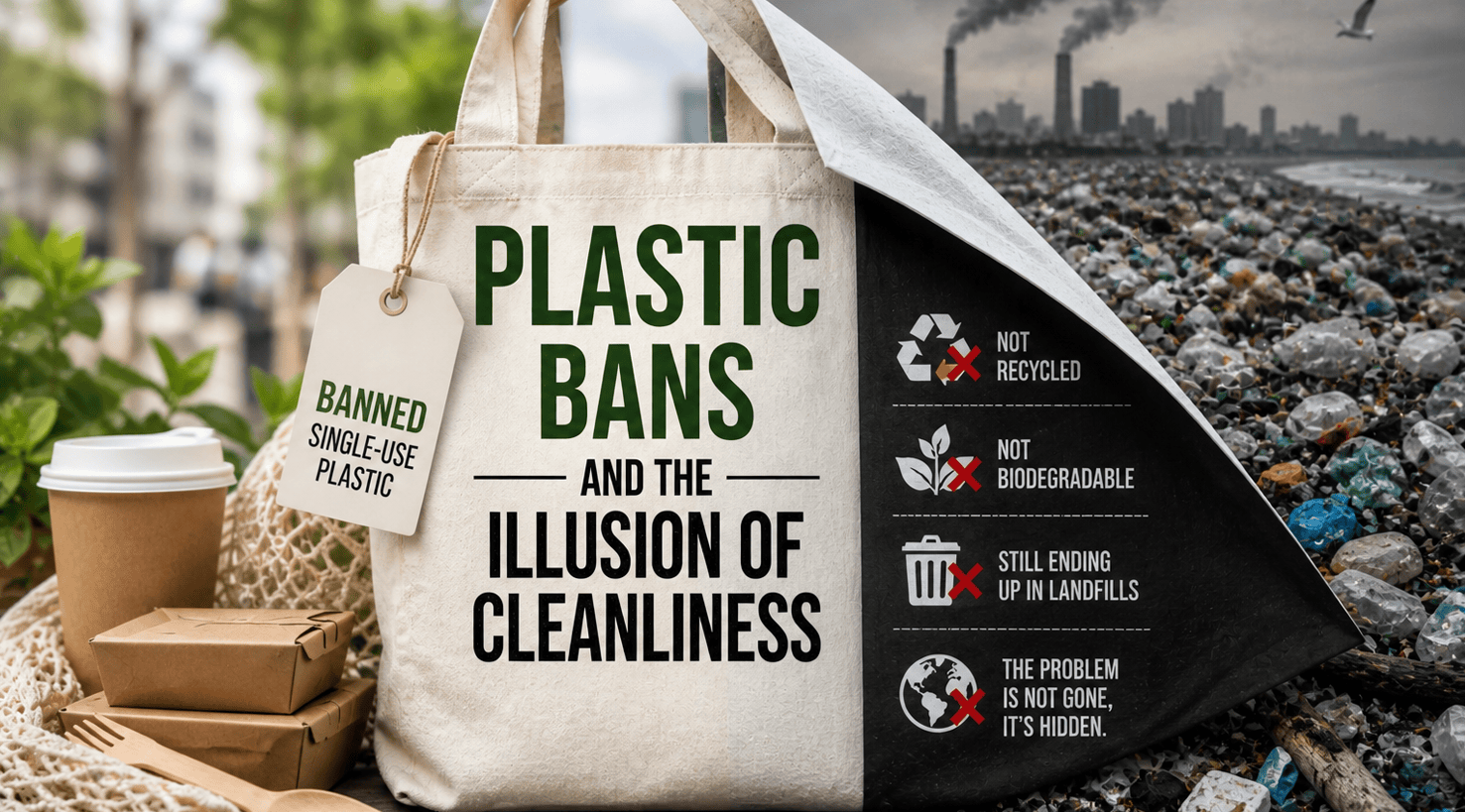
Plastic Bans and the Illusion of Cleanliness
Introduction
Do plastic bans really clean up our environment, or do they only change what ends up in our bins?
The short answer is this: plastic bans can reduce waste—but only when they influence behavior, systems, and responsibility together. On their own, bans are a signal, not a solution. Their true impact depends on what follows after restriction.
Before Talking About Bans, We Need to Understand Plastic Itself
Plastic is made by processing fossil-based raw materials into long-lasting synthetic polymers. These materials are designed to resist heat, water, and pressure, which is exactly why they become a waste problem after use. Once discarded, plastic does not easily return to nature.
Why Plastic Becomes an Environmental Problem After Use
When plastic waste is burned, it releases toxic substances such as dioxins, furans, hydrogen chloride, carbon monoxide, volatile organic compounds (VOCs), and fine particulate matter. These pollutants settle into soil and water, enter food chains, and disrupt natural ecosystems. Over time, they degrade air quality and pose serious risks to human health. This long-lasting toxic impact is a key reason why plastic bans exist.
What Plastic Bans Are Actually Meant to Change
The goal of plastic bans is to lessen the amount of difficult-to-manage waste that enters the environment. They are most effective when they encourage people to reconsider daily routines and reduce wasteful consumption. Bans often succeed in making the use of plastic less automatic and more noticeable.
When Bans Change Materials but Not Waste: What Really Happens
Material Substitution Instead of Waste Reduction:
Plastic bans often replace one material with another, without reducing overall waste generation.
Disposal Still Remains Inevitable:
Alternative materials also require disposal, and without proper systems, they enter the waste stream just like plastic.
Limited Reuse and Recycling Pathways:
When substitutes are not reused, recycled, or correctly managed, they contribute to new forms of waste.
The Real Question Goes Beyond the Ban:
The effectiveness of bans depends not on what is restricted, but on what replaces it—and how that replacement is managed after use.
Awareness Creates Attention — Infrastructure Creates Impact
Plastic bans are powerful awareness tools. They spark public discussion and make environmental responsibility harder to ignore. But awareness without infrastructure has limits. Waste reduction depends heavily on collection systems, segregation practices, and treatment capacity.
Why Weak Waste Systems Undermine Strong Policies
When these systems are weak, even well-intended bans struggle to deliver results. Waste may move from visible spaces to informal dumping, open burning, or unmanaged disposal. Real waste reduction happens when policy is supported by practical systems that guide waste safely from use to recovery.
The Often-Ignored Human Side of Plastic Waste
Plastic bans also impact livelihoods, especially in informal waste recovery networks. These workers often play a quiet but crucial role in reducing waste leakage. When bans disrupt material flows without providing alternatives, recovery systems weaken.
Waste Reduction Is Not Just Environmental — It’s Social and Economic Too
Effective bans recognize that waste reduction is not just an environmental issue, it is a social and economic one. Policies that include producers, consumers, and waste workers tend to create longer-lasting change than restrictions imposed in isolation.
Are Plastic Bans the End Goal?
- Plastic bans are a starting point, not the finish line.
- They reshape behavior and trigger necessary conversations.
- Without system-wide responsibility, their impact remains partial.
“Waste is not just what we throw away—it is what we fail to take responsibility for.”
How HBGTM Insights Can Help
Understanding whether plastic bans truly reduce waste requires insight into consumer behavior, trust, and decision-making. This is where HBGTM Insights plays a critical role. By specializing in consumer trust and behavior research, CX and loyalty measurement studies, and personalization effectiveness with privacy perception analysis, HBGTM Insights helps organizations understand how people respond to policy, sustainability messaging, and change.
With an intelligence-driven approach, HBGTM Insights supports retail and consumer-focused companies in building scalable, compliant, and high-impact strategies rooted in real consumer insight. Effective commercialization begins with stronger understanding. Whether evaluating engagement strategies or aligning customer experience with responsibility expectations, HBGTM Insights helps turn intent into impact.
Visit www.hbginsights.com to explore how research-driven intelligence can unlock value, strengthen trust, and support long-term growth.
Discover MoreAbout The Author

Sagar Gulati
Sagar is an accomplished insights professional with 3.5 years of experience leading end-to-end market research projects across global FMCG portfolios. His background includes roles at NielsenIQ, Reliance, and Kantar, where he managed high-visibility strategic studies for Fortune 500 clients such as Nestlé, Unilever, Johnson & Johnson, and Coca-Cola India.
He brings deep expertise in product testing, brand health measurement, concept validation, and shopper behaviour research, coupled with strong cross-regional experience working with stakeholders across APAC and Europe. Known for his analytical rigor and client-centric approach, Sagar consistently delivers actionable insights that drive brand and business impact.
Sagar holds a B.Pharm degree and is a registered pharmacist with the Haryana Pharmacy Council, and he completed his MBA in Marketing from ICFAI Mumbai.
Know More